
Renovate or Rebuild? Newcastle Home Guide & Costs

A practical guide to comparing home renovation costs, rebuild budgets and approvals before you commit.
If you own an older home in Newcastle or Lake Macquarie, chances are you have asked yourself the same question thousands of local homeowners are typing into Google right now: should we renovate, or knock it down and start again?
It is rarely a simple decision. You might love your street, your neighbours and your school zone, but the house itself no longer works for the way your family lives. Before you can move forward, you need honest answers about home renovation costs in Newcastle, what a knockdown rebuild actually involves, and which path delivers better value for your specific block and budget.
As experienced builders in Newcastle and Lake Macquarie, the team at Altered Building & Renovation has guided homeowners through both paths. This guide breaks down the real costs, the deciding factors, and the questions worth asking before you commit either way.
Renovation vs Rebuild: What Each Path Actually Involves
A Large-Scale Renovation
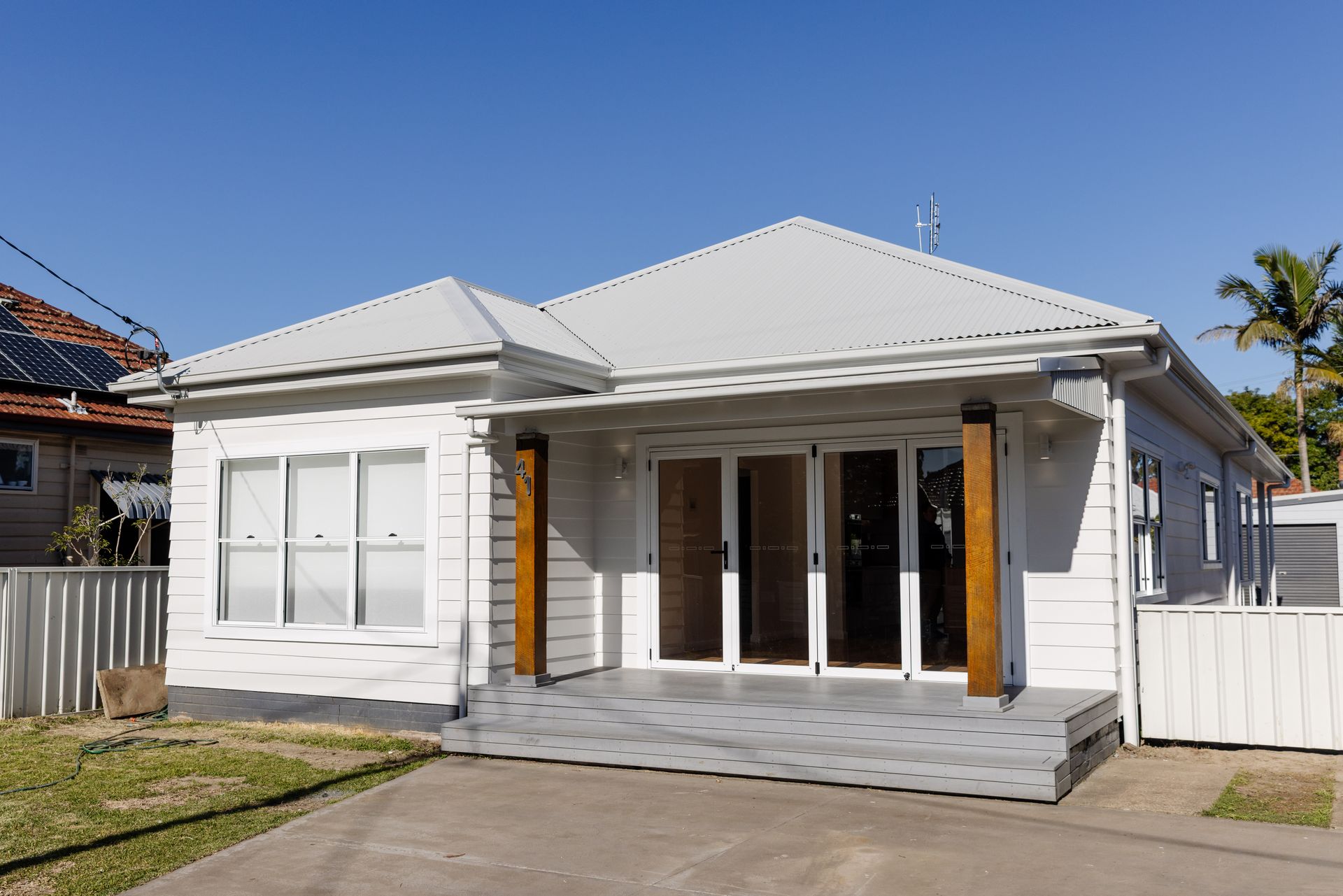
This means working with your existing structure. That could be a full internal transformation, a ground floor extension, a second storey addition, or reconfiguring the layout to create open-plan living. You keep the bones of the house, and often its character, while modernising everything around them.
A Knockdown Rebuild
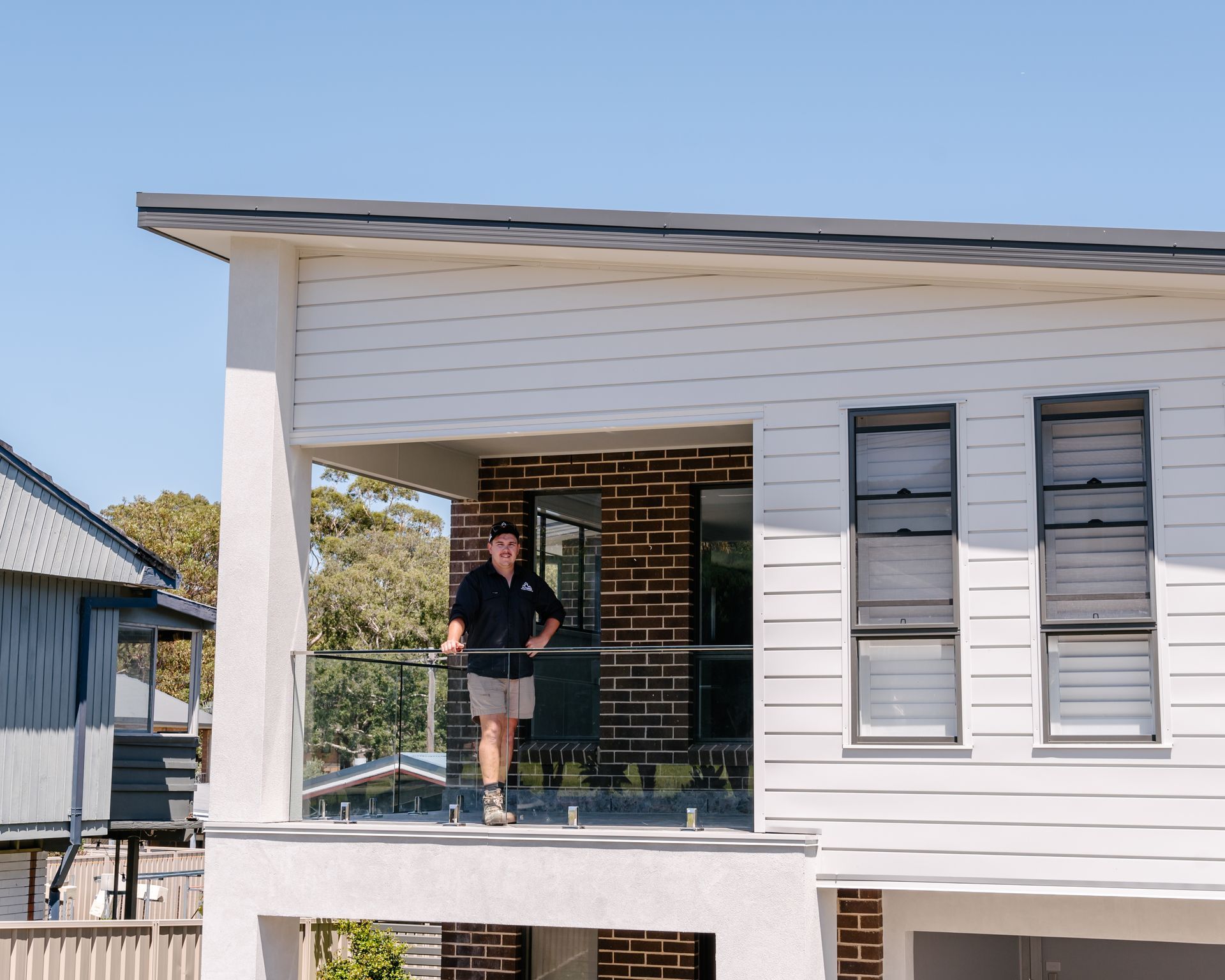
This means demolishing the existing home and constructing a brand-new house on the same block. You stay in the location you love, but you start with a blank canvas. Site orientation, floor plan, energy efficiency and materials are all designed from scratch rather than adapted from what is already there.
Secondary Dwelling
There is a third option worth mentioning for growing or multi-generational families: keeping the existing home largely as is and adding a granny flat or secondary dwelling. In NSW, a secondary dwelling of up to 60 square metres can often be approved as complying development, which makes it one of the faster ways to add liveable space and long-term value to a property.
Home Renovation Cost: What to Realistically Budget
Cost is the first question almost every homeowner asks, so let us deal with it directly. Every project is different, but current NSW industry figures give you a useful starting framework.
Renovation Cost Per Square Metre
As a broad guide for 2026, renovation cost per square metre in NSW typically falls into these bands:
- Cosmetic renovations (paint, flooring, fixtures, no layout changes): roughly $1,000 to $2,000 per square metre
- Mid-range full renovations (new kitchen and bathrooms, some wall changes): roughly $2,500 to $4,000 per square metre
- Structural renovations and extensions (removing load-bearing walls, second storeys, major additions): $3,500 to $5,000 or more per square metre
In dollar terms, a full renovation of a typical three-bedroom Newcastle home commonly lands between $150,000 and $400,000 depending on scope and finish level. A ground floor extension often sits between $120,000 and $300,000, while a second storey addition can run from $250,000 upward once structural engineering, temporary propping and roofing are included.
New Build And Knockdown Rebuild Costs
A new custom home in the Hunter region typically costs between $2,500 and $4,000 per square metre depending on the design, site and specification, with premium builds sitting higher. On top of the build itself, a knockdown rebuild adds demolition (commonly $20,000 to $50,000 depending on the home's size, access and whether asbestos is present), site surveys, soil testing and approval costs.
Why Renovations Per Square Metre Often Cost More Than New Builds
This surprises many homeowners, but the reasoning is straightforward. Renovating means working around and within an existing structure. Trades spend time protecting finishes, matching old materials to new, and solving problems that only reveal themselves once walls are opened up. A new build, by contrast, is a predictable sequence on a clear site. That is why major structural renovations can exceed new-build rates per square metre, even though a modest renovation remains far cheaper than any rebuild in total dollars.
The honest answer to "which is cheaper" is therefore: it depends entirely on scope. If you are updating kitchens, bathrooms and finishes, renovating wins comfortably. If you effectively want a new house in every room, the numbers start favouring a rebuild.
Five Questions That Decide Renovate vs Rebuild
1. What Condition Is The Existing Structure In?
This is the single biggest factor. A structurally sound home with good bones is an excellent renovation candidate. But if your home has significant footing movement, widespread termite damage, failing stumps or subfloor, or extensive asbestos, you may spend a large portion of your budget just getting back to a sound baseline before any improvement begins. Pre-1990 homes across Newcastle frequently contain asbestos materials, and licensed removal adds real cost. A thorough building inspection before you commit is money well spent.
2. How Much Of The Home Do You Want To Change?
A useful rule of thumb from the industry: if your renovation plans touch more than around 50 to 60 per cent of the home, or your budget approaches 30 per cent or more of the property's value, a rebuild deserves serious consideration. Renovating almost everything usually means paying renovation-level rates for near-new-build scope.
3. Does The Home Have Character Worth Keeping?
Many Newcastle suburbs, from Cooks Hill to Mayfield to New Lambton, are full of Federation and interwar homes with genuine charm. Character features are expensive to recreate and impossible to fake convincingly. If your home has them, renovation and extension often protect both the streetscape and your property's long-term appeal. Some homes also sit within heritage conservation areas, where Newcastle City Council will restrict demolition regardless of your preference, so check this early.
4. What Does Your Block Allow?
A rebuild lets you completely rethink orientation, solar access and how the home sits on the land. Sloping blocks, narrow frontages and view corridors around Lake Macquarie and the coast can all be handled far better with a purpose-designed home than with an adapted old floor plan. On the other hand, some existing homes occupy setbacks or footprints that current planning controls would no longer permit, meaning a rebuild could actually leave you with less usable envelope than you have now. This is a genuine trap, and it is why site assessment should come before any decision.
5. Where Will You Live During The Project?
Large renovations sometimes allow staged work so you can remain in the home, though living in a construction zone for six months tests everyone's patience. A knockdown rebuild requires you to move out entirely, typically for 12 to 18 months including approvals, demolition and construction. Rent for that period belongs in your rebuild budget comparison, and it is a line item many homeowners forget.
Approvals, Timelines and the NSW Rules You Should Know
In NSW, most significant renovations, extensions and all new dwellings require either a Development Application through council or a Complying Development Certificate through a private certifier. Complying development is generally faster where your project meets the standard criteria. You can explore the requirements on the NSW Planning Portal.
A few other protections worth knowing:
- Any residential building work over $5,000 in NSW must be carried out by a licensed builder, and you can verify any licence through NSW Fair Trading.
- For projects over $20,000, your builder must hold Home Building Compensation Fund insurance. This protects you if a builder becomes insolvent or fails to complete the work. Never sign a contract without confirming it is in place.
- Budget a contingency of 10 to 15 per cent on any major project, and 15 to 20 per cent on renovations of older homes, where surprises behind the walls are the rule rather than the exception.
On timelines, a well-managed major renovation typically runs three to nine months of construction. A knockdown rebuild usually takes 12 to 18 months end to end once design, approvals, demolition and the build itself are counted.
Avoiding Over-Capitalisation
Whichever path you choose, the goal is a home that improves your life without exceeding what the property and street can support in value. Experienced renovation builders in Newcastle will talk you through this honestly rather than simply quoting whatever scope you ask for. Sometimes the right advice is to trim the brief. Sometimes it is to acknowledge that the money you are about to pour into an ailing structure would build you something better from scratch. A builder who explains the reasoning behind their recommendation, rather than pushing you toward their preferred project type, is the one worth engaging.
At Altered Building & Renovation, we work across large-scale renovations, extensions, granny flats and custom homes, which means we have no incentive to steer you toward one answer. Our advice starts with your block, your budget and your brief, not our order book. You can see examples of both approaches in our project gallery.
Making the Right Call for Your Home
There is no universal answer to the renovate or rebuild question, and anyone who gives you one without seeing your property is guessing. The right decision comes from an honest assessment of your home's structure, your block's potential, realistic home renovation costs for the Newcastle market, and how long you plan to stay.
If you are weighing up a major renovation, an extension, a granny flat or a new custom home in Newcastle or Lake Macquarie, get in touch with Altered Building & Renovation. We are happy to walk your site, talk through both options and give you the straight answer, whichever direction that points.
Recent Posts